Why Is It Called Belle Wisdom Hall?
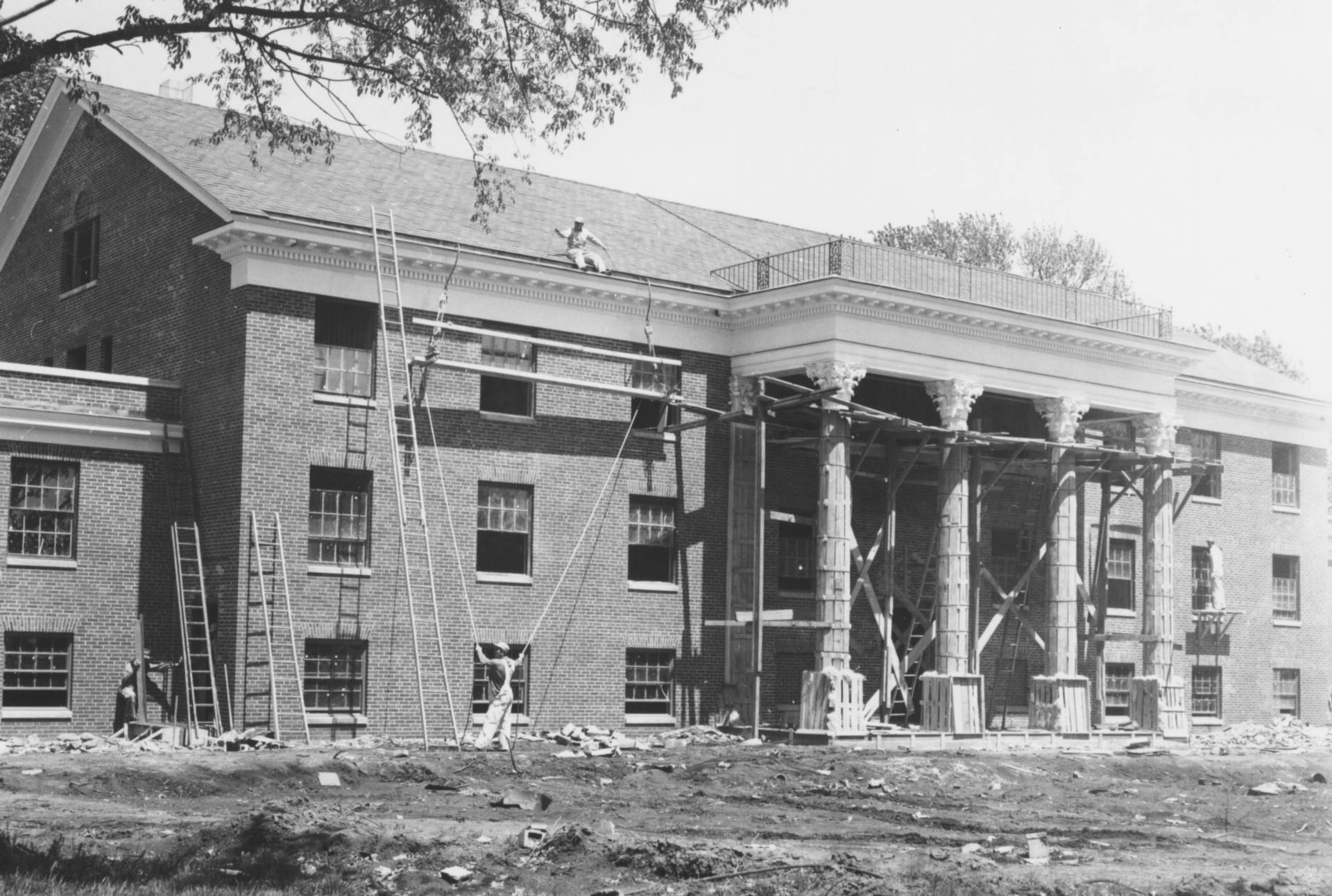
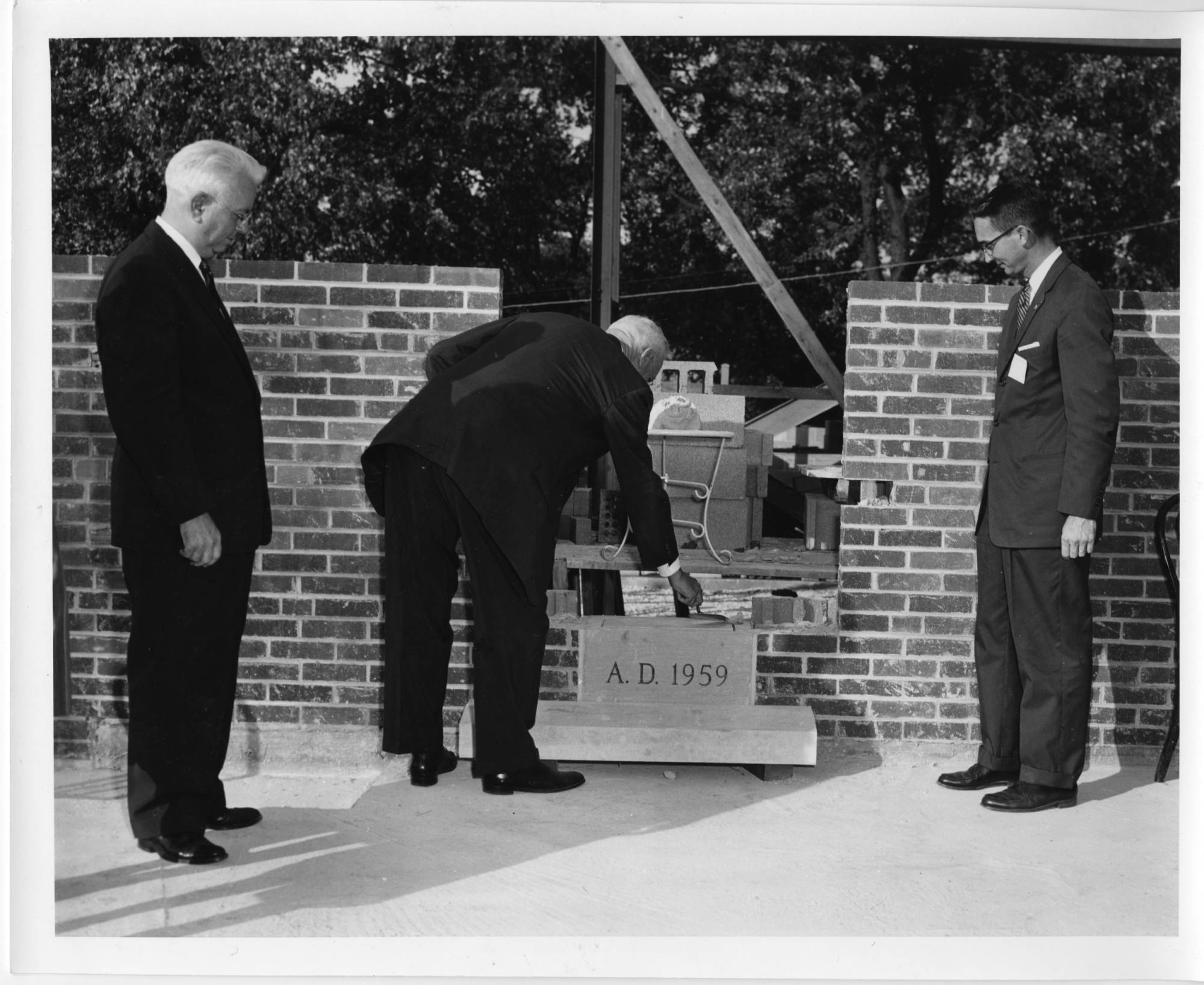
In 1928-1929 Belle Wisdom created The Belle Saffarrans Wisdom Foundation, in memory of her mother, Martha Belle Saffarrans, to assist young women pursuing programs in business education. Though not a trustee of the Kentucky Female Orphan School (KFOS), she was instrumental in its survival. She left the residue of her estate to KFOS comprising several thousand acres of mineral rights near Houston, Texas, and in the Panhandle, when she died in Houston, Texas on 4 September 1945. It would prove to be the largest legacy the school ever received. When the time came, the new residence hall on the campus was named after Mrs. Belle Saffarrans Wisdom.
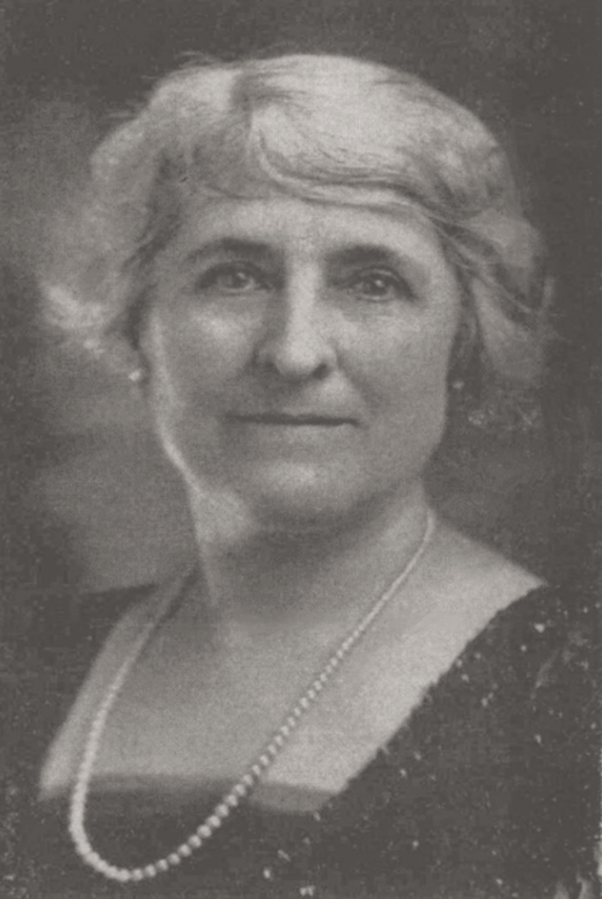
Belle Wisdom was born on 25 December 1864 in Lexington, Kentucky. Her father, Benjamin Henry Wisdom, was an astute businessman and entrepreneur, who grew up in western Kentucky. Though the family moved following Mr. Wisdom’s business pursuits, they remained closely linked to Kentucky.
Somewhere in between, Belle Wisdom met and married the Honorable Charles J. Bronston on 14 February 1897. He was a successful businessman with a law practice as well as serving as president of the Lexington and Richmond Railway Company. His celebrated temper and taste for public controversy brought an end to her time in Lexington when she left him in 1907. Though some two years later, he sued for divorce, he died before the suit was settled. A few weeks later, the judge granted a divorce decree enabling Belle Wisdom Bronston to revert to her maiden name. Thereafter, she styled herself, Mrs. Belle Wisdom.
Why the Kentucky Female Orphan School?
Her interests were not religious; rather, her own penchant for business (she dealt in real estate while living in Lexington) and her concern for disadvantaged girls led her to invest in education and particularly, in preparing women for the business world.
The steady stream of income from the Texas mineral rights enabled KFOS to transform itself into a junior college and obtain accreditation by the Southern association of Colleges and Schools. The school upgraded academic standards, modernized old buildings and grounds, and added the new residence hall named after the lady who made all of it possible.
Options and Opportunities
Founder Dr. Lewis L Pinkerton had clearly stated the purpose of the school “will be, to afford the orphan girl, the most extensive and valuable education that can possibly be acquired within the time prescribed”1 as opposed to the standard purpose of the Antebellum Period female school in ‘educating a proper Victorian Christian helpmeet’.2
The need was great for well-trained teachers, familiar with life in the Commonwealth; a new law specifically stated that qualified women could now teach in public schools wherever any were established. The young KFOS graduate was familiar with Latin, Geography, English and Composition, Natural History, Physiology, US and General History, Algebra, Bible Studies, Geology, Higher Arithmetic, Botany, and more. They were well-placed to bring education to all parts of the country. Dr. Pinkerton recognized that not all students were suited to the teaching life; needlework was taught at the school and there were graduates who would go on to make their living in the millinery field. The needle worker might be an entrepreneur and establish her own business; indeed, one student, Miss Fanny Johnstone of Eutaw AL did just that, setting up a millinery store in Eutaw. Such a graduate might have a far better chance of prosperity than a teacher.
As opportunities widened for women, KFOS began offering courses in business where female philanthropists led the way for these changes including Mrs Belle Wisdom (early 1900s) after whom the residence hall is named and Mrs. Emily Tubman (late 1800s), an astute Georgia businesswoman. In the late 20th and early 21st centuries, Mrs. Anne Hart Raymond, Mrs. Ann Bowling, Mrs. Janet Hunter, and Mrs. Belinda Metzger have made the difference in the fate of the school.
In 1897 the board added business education as an alternative for their students directing the administration to add courses in typewriting, bookkeeping, and stenography to the curriculum as soon as practicable. The exceptional instructor in business courses, Miss Pearl Hays of Trinidad Colorado, resigned in 1901. successful business program did not take hold until 1927, based on demonstrable student interest and the commitment of adequate financial resources from Belle Wisdom. At the turn of the century, the school could see the need for change but simply was unable to make it happen.
1 Lewis L. Pinkerton, The Millennial Harbinger, Third Series, Vol. V, No. XII. Bethany, VA, 1848, pp. 712.
2 William E. Ellis, A History of Education in Kentucky. Kentucky: The University Press of Kentucky, 2011, p 56.