On February 23, 1847, the Kentucky legislature cast its final vote in approval of the proposed Kentucky Female Orphan School (KFOS) charter, the brainchild of the Rev. Dr. Lewis Letig Pinkerton. He envisioned, along with his fellow intellectual traveler James Ware Parrish, a school where disadvantaged girls could be trained toward an honorable position in life. Public education, particularly for girls, was rare at the time. In Dr. Pinkerton’s own words, “While the most probable destiny of the pupils in their final settlement for life, should not be lost sight of, still, everything bordering on servility shall be strictly prohibited.” The purpose of the school “will be, to afford the orphan girl, the most extensive and valuable education that can possibly be acquired within the time prescribed.” [The Millennial Harbinger, Third Series, Vol V, No XII (Bethany, VA, 1848), pp 712-714.]
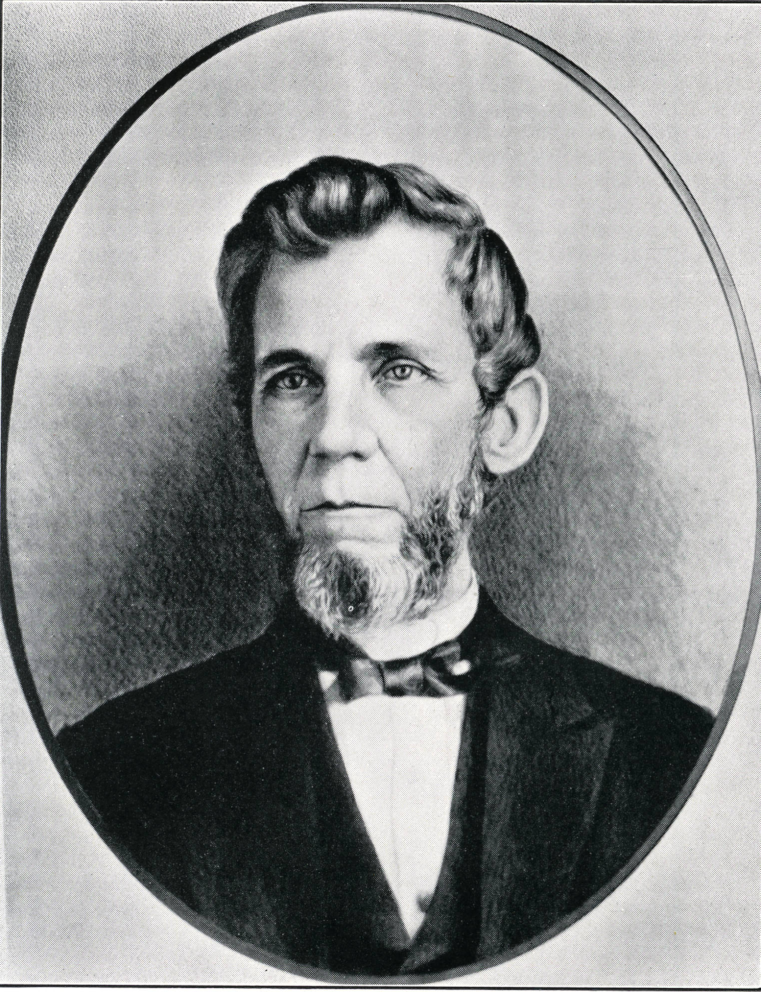
Dr. Pinkerton was born, January 28, 1812, some twelve miles outside of Baltimore, Maryland, the son of William and Elizabeth Pinkerton. His paternal grandparents were Irish, and his maternal grandparents were of German descent. He was raised in the Calvinist faith of his father but found his spiritual home in the Alexander Campbell reform movement in the summer of 1830. His family moved to Chester County, Pennsylvania and from there to Brook County, Virginia, near Bethany, where Alexander Campbell was based. Lewis Letig entered the Pleasant Hill Academy, a school run by Alexander Campbell’s sister, Jane McKeever. He went on to Trenton in Butler County, Ohio where he studied medicine and supplemented his income by teaching at a local school where he met his future wife, Sarah Ann Ball. They married in 1833 and by 1835 he was practicing medicine some thirty miles north of Cincinnati eventually ending up in Carthage, just six miles from Cincinnati.

Throughout this time, the religious ferment engulfing western Ohio, eastern Indiana, and Kentucky did not leave Dr. Pinkerton untouched. He succumbed to the fervor of the age and in May 1838, at the age of twenty-seven, he began to preach. His first trip to Kentucky was in 1838 where he travelled evangelizing with William Morton and John T. Johnson. He found time to move his wife and child to Kentucky where they stayed in temporary accommodation while he pursued his vocation. He moved his family back to Carthage in Ohio and set out on a preaching tour of Ohio and Indiana.
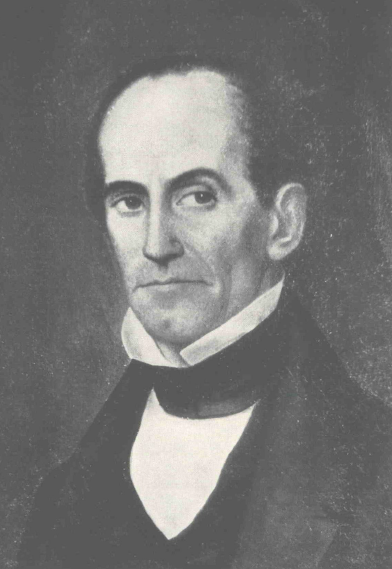
In December 1839 Dr. Pinkerton moved his family permanently to Kentucky, settling at Brunerstown where Dr. Pinkerton entered medical practice with a Dr. Seaton. His heart was set on evangelizing, and he left medicine after a few months to pursue religious work. In 1844 he accepted the position of pastor at the new Christian Church at Midway where he supplemented his income by opening a paying school for girls. He called it the Baconian Institute and ran it from the church until his home on Winter Street (now called Pinkerton-Rouse Place and the residence of the university president) was completed where he shifted the school to his premises.
It was in 1842 that Dr. Pinkerton conceived the idea of a female orphan school while attending a service at the Old Round Top Church in Madison County after glimpsing a poor young blind girl. His thoughts moved from compassion to action, formulating the principles of the school. In 1845 he raised the subject with Midway Church Elder James Ware Parrish who enthusiastically offered his assistance in bringing the project to fruition. Immediately, Mr. Parrish and John T. Johnson set about raising funds for the project. Parrish focused on the local area due to his ill health while Johnson moved farther afield. Within a year, they and others raised the funds to begin the process of chartering the school.
The charter lists the founding trustees who shared this vision of education for girls: James Ware Parrish, James W. Redd, BP Smith, WF Patterson, Lewis Crutcher, John Curd, John T. Johnson, John G. Allen, and LL Pinkerton. The school opened to sixteen girls in October 1849. The curriculum developed by Dr. Pinkerton was wide-ranging. The young KFOS graduate was familiar with Latin, Geography, English and Composition, Natural History, Physiology, US and General History, Algebra, Bible Studies, Geology, Higher Arithmetic, Botany, and more. They were well-placed to bring education to all parts of the country. Dr. Pinkerton recognized that not all students were suited to the teaching life; needlework was taught at the school and there were graduates who would go on to make their living in the millinery field. And yet, until the establishment of teacher training schools in the state, KFOS was the only institution in the commonwealth that focused on the education of teachers.

Dr. Pinkerton served the Midway community for sixteen years as preacher, teacher, and physician as well as publishing his own periodical and contributing articles to other journals. He was instrumental in establishing KFOS on a sound foundation. In 1860 he accepted the chair of English Literature at Kentucky University and moved with his family to Harrodsburg. He would no longer be ‘next door’ to his beloved KFOS, but he would be able to retain his seat on the board. He may very well have concluded that it was time to make a change. He had stirred things up in Midway with a lecture on the corruption of western civilization that tolerated an evil like slavery and the introduction of a melodeon into the of the Midway church service, upsetting many who thought using musical instruments in worship lacked scriptural authority.

She was the the granddaughter of Trustee Adam Hibler.
Circumstances intervened to place Dr Pinkerton in an invidious position. He did not support slavery, but half of Kentucky did. The state remained neutral, but troops arrived regardless. The decisive Battle of Perryville took place on October 7 and 8 and the Union forces finally won, and the Confederates retreated to Harrodsburg where they took over Kentucky University’s main building for a hospital. Shortly thereafter, they withdrew to Tennessee via Cumberland Gap. In his two years based in Harrodsburg, Dr. Pinkerton did not hide his loyalty to the Union. He was shattered when his eldest son, William, enlisted in the Confederate army.
He withdrew from the university and accepted an initial appointment as assistant surgeon in the newly-formed Eleventh Kentucky Regiment and was straightaway promoted to head surgeon. After exhausting work, Dr. Pinkerton fell ill. For six and a half weeks he struggled to recover while staying with friends in Louisville. Mrs. Pinkerton was escorted to Louisville by John Bowman, Chairman of Kentucky University, fearing the worst. Bowman took Pinkerton into his carriage, and they made their slow way back to Harrodsburg. Dr. Pinkerton resumed his academic duties in the spring of 1863.
The destruction of the university’s main building in February 1864 forced a recalibration of its future. Chairman Bowman arranged for Kentucky University to merge with a struggling Transylvania University and moved it to Lexington. The state legislature approved the merger on February 28, 1865. Dr. Pinkerton and his family moved to Lexington where Pinkerton was selected President of the College of Arts of the newly merged institution. Now based in Lexington, he began to experience extreme social rejection because of his position on the war. His tenure as head of the Arts College was so brief that it was almost forgotten; the pressure on him was so great, he felt compelled to resign his academic position after one semester.
Dr. Pinkerton tried to rejoin the main Christian Church of Lexington where he had previously served as pastor, but he was shunned by the congregation; indeed, no area churches ever asked him to preach to them again. He did not turn his back on his principles, and they could not forgive him for this. Without his academic position and with no prospects of local religious work, he accepted a political appointment as agent for the Freedmen’s Bureau in Fayette County. Congress established the Bureau in March 1865 even before the war ended to supervise and coordinate the government’s efforts to provide clothing, food, and medicines to Black refugees. It also attempted to provide education to the emancipated slaves, reunite dislocated families, and dispose of seized properties. He viewed this as secular missionary work; sadly, it entailed legal maneuvering and manipulation which he could not reconcile with his moral precepts. Once again, he resigned but continued to work on behalf of the emancipated slaves, even if he had no obvious means of support. He could have moved north, but he preferred to do what he could for the people who needed him. He accepted itinerant preaching in Ohio and Illinois and cultivated people willing to assist him in his new endeavor. Members of these northern churches that received Dr Pinkerton, had been active in the “Underground Railroad,” helping escaped slaves to find their way to refuge in Canada.
Insolvency looming, Dr. Pinkerton was saved by his old friend US Congressman James A. Garfield (the future twentieth president of the United States) who influenced President Ulysses S Grant to appoint Dr Pinkerton as special mail agent to investigate problems in the postal service in Kentucky. The Post Office sent Dr. Pinkerton to eastern Kentucky in October 1874 to investigate irregularities in the service there. He returned to Lexington at the end of that month in failing health. By mid-January he knew the end was near. In his last days, he dictated farewell messages to family and friends. His wife, Sarah, and their children were with him. Friends came to the house to bid him farewell; even former adversaries came to express their affection. On January 28, 1875, his birthday, he died just before sunrise.
His intellectual gifts to the Kentucky Female Orphan School and all its iterations to follow, resulted in decades of teachers led by astute and compassionate principals producing many of the teachers that went out into the larger world to educate others, to go on to be principals, teachers, missionaries, business owners, attorneys, doctors, and mothers of daughters whom they sent when needed to KFOS. It is the ability to change and address the needs of students that has kept the school relevant. Dr. Pinkerton’s student-centered curriculum, with an imaginative balance between studies in the liberal and practical arts has shaped the institution’s educational philosophy to this day. Meeting society’s needs by offering educational opportunities to those to whom they have largely been denied has been integral to the school’s mission.
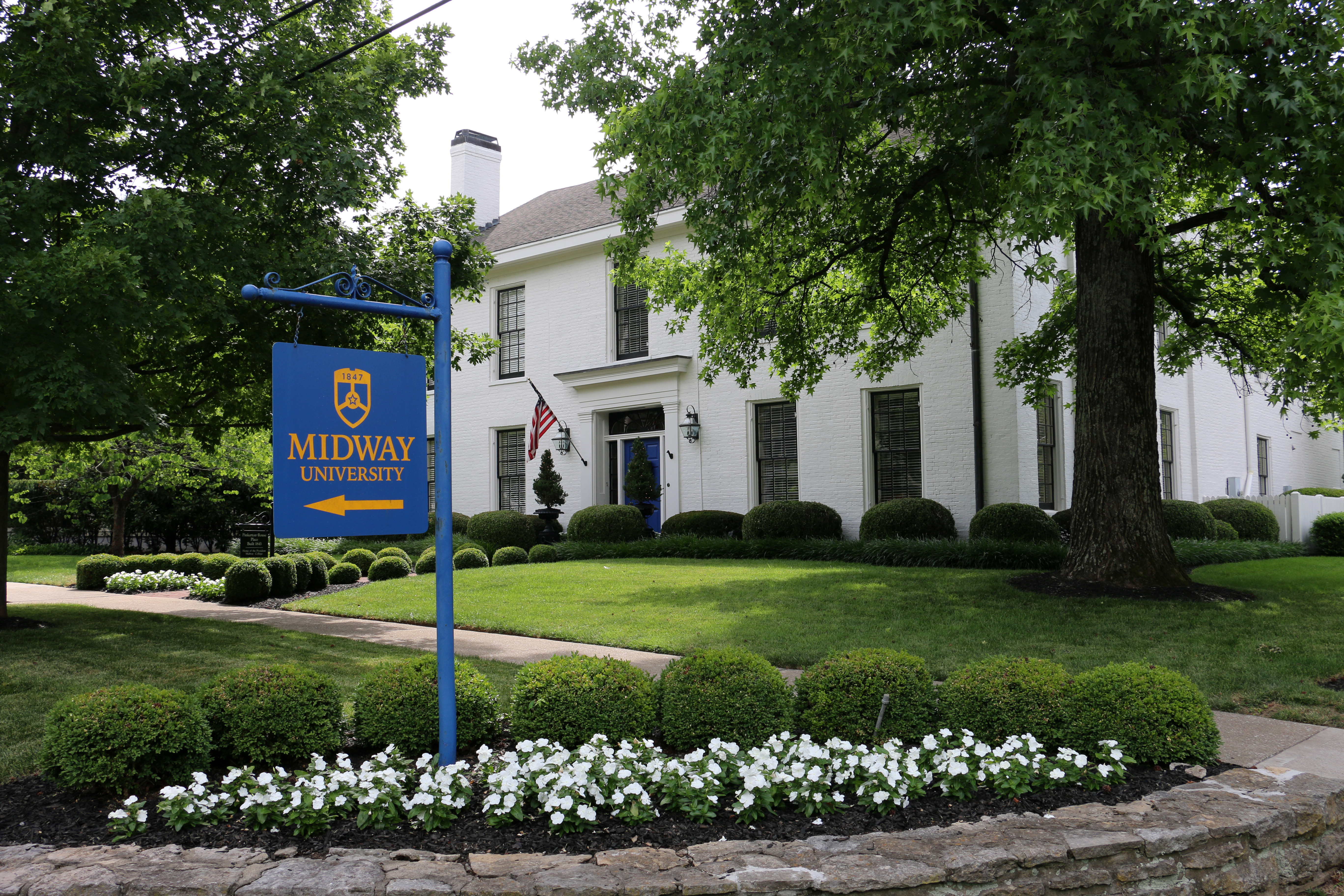
Midway University, resting quietly in the enchanting town of Midway, continues to transform lives for those most in need.